Why Connected Marketing Systems Outperform Isolated Campaigns
Marketing becomes harder to manage when every channel works separately.
SEO targets one audience. Google Ads promotes another offer. Social media follows a different message. Leads arrive in inboxes or spreadsheets, while the sales team works from a separate CRM.
Each activity may generate results, but the business often lacks a clear view of how everything works together.
This is where connected marketing systems become valuable.
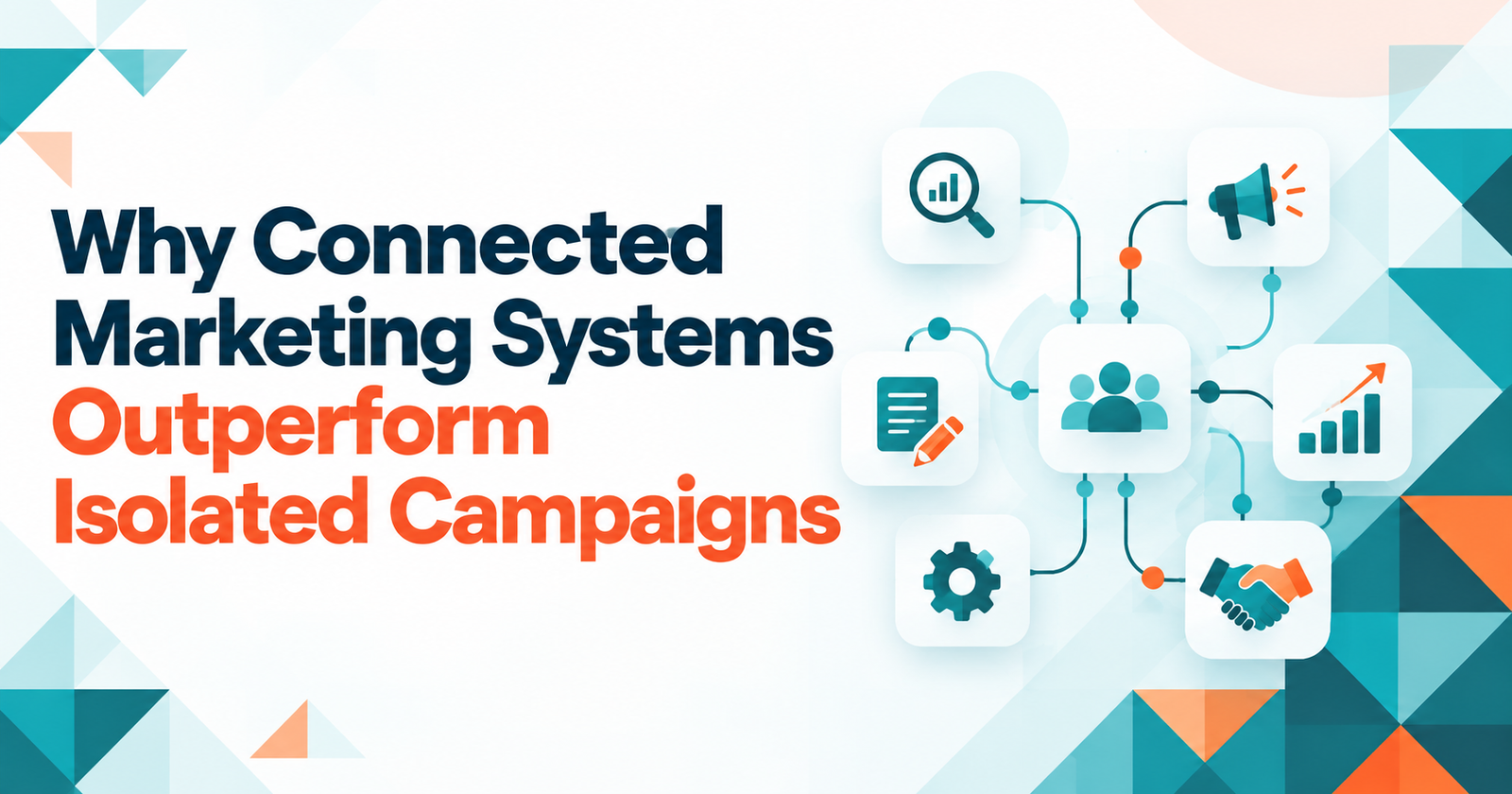
A connected marketing system brings your channels, website, CRM, automation and measurement together around the same customer journey and business goals.
What Is a Connected Marketing System?
A connected marketing system links different parts of digital marketing so they support each other.
This can include:
- SEO
- Google Ads
- Social media marketing
- Content marketing
- Email marketing
- CRM
- Marketing automation
- Landing pages
- Conversion tracking
- Sales follow-up
The goal is not to use every available channel.
The goal is to make sure the channels you use work towards the same outcome.
For example, a customer may discover your business through social media, later find your website through Google Search, read a blog, click a paid ad and then submit an enquiry.
If each channel is measured separately, it can be difficult to understand what actually contributed to that conversion.
Why Isolated Campaigns Create Problems
Standalone campaigns can work well for short-term offers, events or testing.
Problems start when every marketing activity operates independently.
This often leads to:
- Inconsistent messaging
- Duplicate work
- Poor tracking
- Weak lead follow-up
- Disconnected reporting
- Wasted advertising spend
A business may see strong clicks, traffic or impressions while still struggling to understand which activity is generating qualified leads or customers.
1. Customers Move Across Multiple Channels
Customers rarely follow a straight path.
Someone may first see your brand on social media, search for your services later, visit your website several times and only contact you after seeing a Google Ad.
This means one channel may create awareness while another helps generate the final enquiry.
A connected marketing strategy helps businesses understand the full customer journey rather than giving all the credit to one final interaction.
2. Marketing Channels Can Support Each Other
When channels are connected, insights from one area can improve another.
For example:
Google Ads can reveal search terms that generate strong leads.
Those terms can then guide SEO and content planning.
SEO content can attract visitors who later enter remarketing campaigns.
CRM data can show which campaigns generate better-quality customers.
Sales feedback can help marketing teams refine targeting and messaging.
This creates a continuous feedback loop instead of running campaigns without shared learning.
3. Better Data Leads to Better Decisions
Disconnected marketing usually creates disconnected reporting.
One platform reports clicks.
Another reports impressions.
SEO tools show rankings.
Email software reports opens.
The CRM shows sales.
But business owners need to know more than that.
They need answers to questions such as:
- Which channels generate qualified leads?
- Which campaigns create actual customers?
- Which keywords produce poor-quality enquiries?
- Which landing pages convert best?
- What is the cost of acquiring a customer?
- Which marketing activity contributes to revenue?
A connected system makes it easier to link marketing performance with real business outcomes.
4. Connected Marketing Can Reduce Wasted Spend
Businesses often increase advertising budgets when results are weak.
But more traffic is not always the answer.
Sometimes the real issue is:
- Poor landing pages
- Weak calls to action
- Slow lead response
- Inconsistent messaging
- Bad targeting
- Missing follow-up
- Poor conversion tracking
A connected system helps identify where the actual problem sits.
For example, if Google Ads is bringing qualified traffic but the landing page has a low conversion rate, the better solution may be conversion rate optimisation rather than spending more on ads.
5. Messaging Becomes More Consistent
Customers may interact with your business several times before making a decision.
If each channel gives them a different message, the experience becomes confusing.
Your Google Ads, SEO pages, social content, emails and landing pages should all support the same core positioning.
The format can change depending on the channel, but the overall message should remain consistent.
This makes it easier for potential customers to understand what you offer and why they should choose your business.
6. CRM and Automation Improve Lead Follow-Up
Generating leads is only one part of marketing.
What happens after the enquiry matters just as much.
Businesses can lose opportunities when:
- Leads are contacted too late
- Enquiries are missed
- Follow-ups rely on manual reminders
- Sales teams lack lead information
- Marketing cannot see which leads became customers
Connecting marketing with a CRM helps track leads from first enquiry through to sale.
Marketing automation can also support tasks such as:
- Enquiry confirmations
- Lead assignment
- Follow-up reminders
- Email sequences
- Lead nurturing
Automation should support the sales process, not replace genuine human interaction.
7. Connected Marketing Improves Attribution
Attribution helps businesses understand which marketing touchpoints contributed to a conversion.
For example, a customer may:
- See a social media post
- Search for the business on Google
- Read a blog
- Click a Google Ad
- Submit an enquiry
If the business only looks at the final click, Google Ads may receive all the credit.
But the earlier interactions may also have influenced the decision.
Connected tracking provides a better view of how channels work together and helps businesses make smarter budget decisions.
Connected Marketing Does Not Mean More Marketing
A connected marketing system does not mean using every social platform, advertising channel or marketing tool.
In fact, adding too many channels can create more problems.
A better approach is to first understand:
- Who your target customer is
- Where they search for information
- What questions they ask
- Which channels influence their decisions
- What happens after they submit an enquiry
- How marketing results will be measured
Then choose the channels that make sense.
The focus should be on connection, not volume.
When Do Isolated Campaigns Still Make Sense?
Standalone campaigns can still be useful when a business is:
- Testing a new service
- Promoting an event
- Running a seasonal offer
- Testing a new audience
- Launching a short-term campaign
The important part is to take the data and lessons from these campaigns and feed them back into the wider marketing strategy.
How to Build a Connected Marketing System
Start by reviewing the complete customer journey.
Look at how customers discover your business, what pages they visit, how enquiries are captured and what happens after they contact you.
Then connect the key parts of your marketing setup.
Step 1: Align Your Marketing Strategy
Make sure SEO, paid ads, content and social media focus on the same business priorities.
Step 2: Improve Tracking
Track meaningful actions such as enquiries, calls, bookings and qualified leads.
Step 3: Connect Your CRM
Capture lead sources and sales outcomes so marketing performance can be measured beyond clicks and form submissions.
Step 4: Improve Follow-Up
Use clear processes and automation where appropriate to reduce missed opportunities.
Step 5: Review Business Metrics
Focus on metrics that matter, including:
- Qualified leads
- Conversion rate
- Customer acquisition cost
- Sales opportunities
- Revenue
- Return on marketing investment
Why Connected Marketing Matters for Melbourne Businesses
Melbourne is competitive across industries such as professional services, property, healthcare, education, trades and retail.
Customers can compare businesses quickly through search engines, ads, websites, social media and online reviews.
A disconnected marketing approach may still generate traffic.
But when SEO, Google Ads, content, website conversion, CRM and follow-up processes work together, businesses gain a clearer view of what is driving enquiries and where improvements should be made.
That makes marketing easier to measure, improve and scale.
Build a Marketing System, Not Just More Campaigns
Running more campaigns does not automatically create better results.
The stronger approach is to understand how each channel contributes to the customer journey and how marketing activity connects with sales outcomes.
A well-built connected marketing system can help businesses reduce wasted spend, improve lead quality, strengthen tracking and make better marketing decisions.
Need a More Connected Marketing Strategy?
Melbourne Marketing Agency helps businesses connect SEO, Google Ads, content, social media, conversion optimisation, CRM and marketing automation around clear business goals.
Speak with Melbourne Marketing Agency about building a connected digital marketing system for your business.
Frequently Asked Questions
What is a connected marketing system?
A connected marketing system links marketing channels, website activity, CRM data, automation and measurement around the same customer journey and business goals.
Are connected marketing systems better than standalone campaigns?
They can be more effective for long-term growth because they allow channels to share data, messaging and customer insights. Standalone campaigns can still work well for testing and short-term promotions.
Do small businesses need connected marketing?
Yes. Even a simple setup connecting your website, marketing channels, CRM and lead follow-up process can improve visibility and reduce missed opportunities.
How does CRM improve digital marketing?
A CRM helps track what happens after a lead is generated. This allows businesses to see which marketing channels create qualified leads, opportunities and customers.
What channels can be part of a connected marketing strategy?
Common channels include SEO, Google Ads, social media, content marketing, email marketing and remarketing. The right combination depends on your audience and business goals.